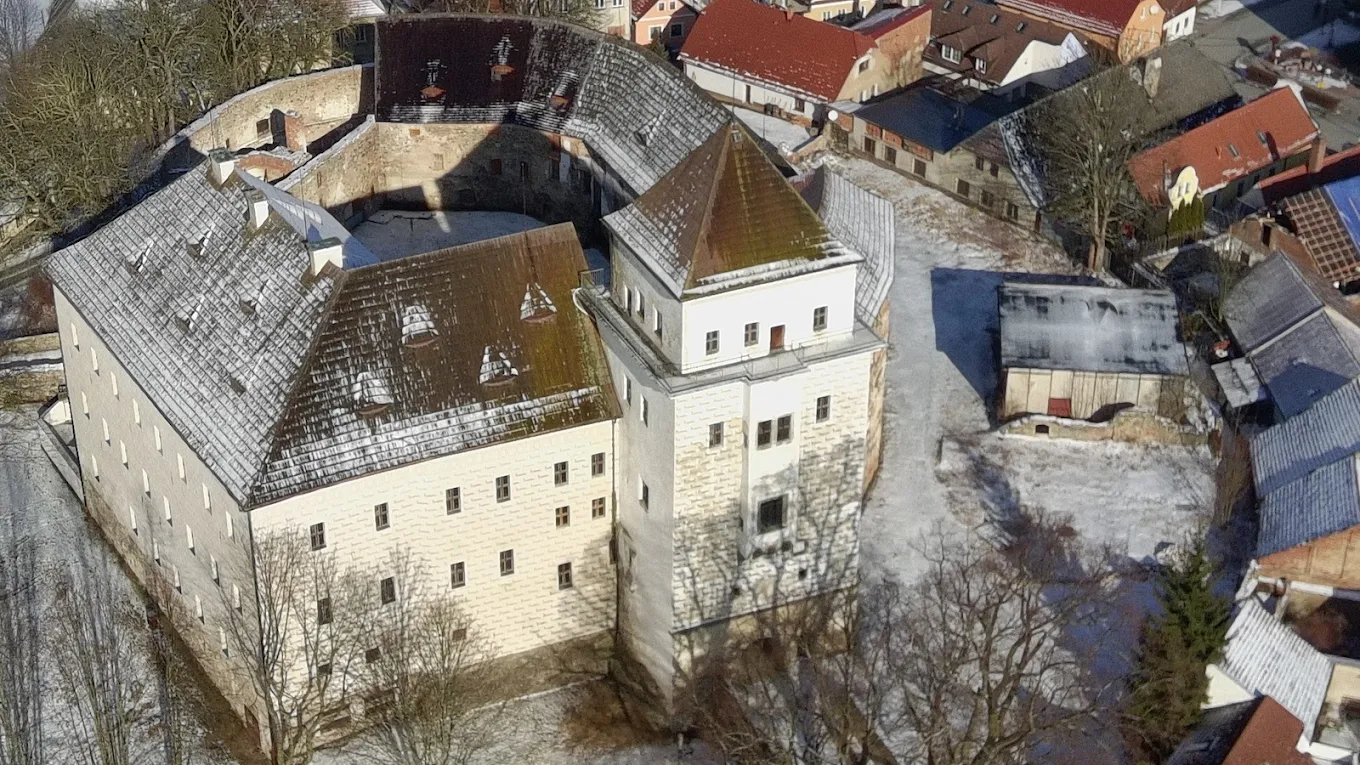
Rožmitál pod Třemšínem Chateau
A historic chateau complex in a small town below the Brdy hills, gradually being restored; check in advance whether it is open.


A Renaissance chateau with a Baroque chapel, historic interiors, one of the oldest chateau libraries in Bohemia and an English-style park.
The chateau stands on the eastern edge of Březnice by the Vlčava stream, about 14 km south of Orlov as the crow flies. It is one of the closest chateaux you can visit from the resort, and its tours suit both families with children and history enthusiasts.
The basic tour takes you through rooms furnished in styles from Gothic to Biedermeier. The extended tour adds the banqueting hall and the Lokšan library from the mid-16th century, one of the oldest chateau libraries in Bohemia preserved in its original form. You can also see the armoury, with weapons from the 15th to the 19th century, and the Baroque chapel with its Rococo organ. For children there is an exhibition about the fairy-tale creatures of the Brdy hills in the Renaissance cellar. The chateau also opens the Březnice synagogue, with an exhibition on Jewish culture.
A Gothic fortified manor of the Buzic family once stood here. In the 16th century Jiří of Lokšany, secretary to King Ferdinand I, and later his widow Kateřina turned it into a Renaissance residence. Archduke Ferdinand of Tyrol secretly married Philippine Welser, Kateřina's niece, at the chateau. The early Baroque chapel was built in 1625–1632 by Přibík Jeníšek of Újezd.
The chateau is surrounded by an English-style park of about 20 hectares with two ponds and rare trees. The park is wheelchair accessible, the chateau is not. The car park is right next to the grounds, and there is a restaurant with a children's playground behind the chateau. Current opening hours and admission prices are on the chateau website.
A historic chateau complex in a small town below the Brdy hills, gradually being restored; check in advance whether it is open.
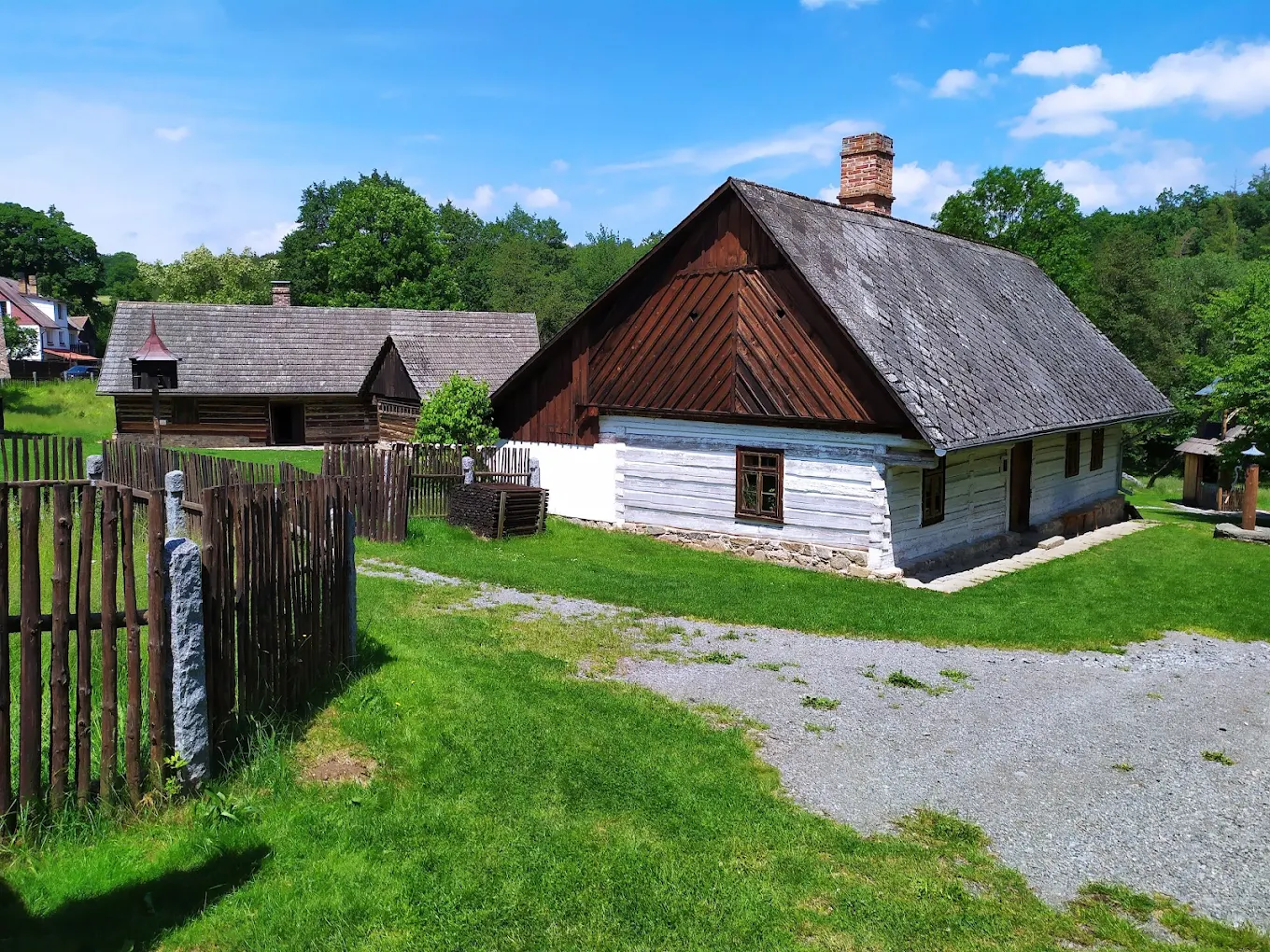
A museum of rural buildings showing how people lived, farmed and built in the villages of the central Vltava region.